
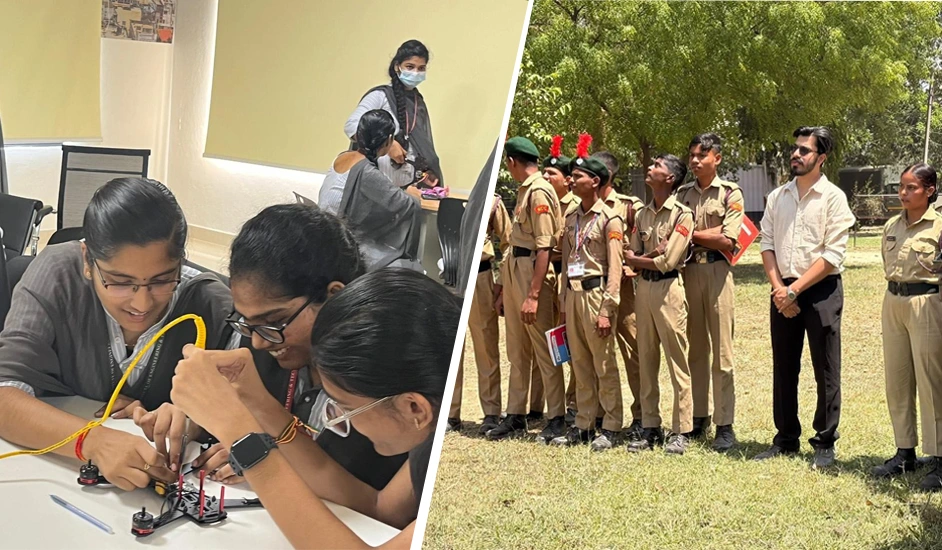
The drone industry is evolving faster than ever, and students, engineers, creators, and innovators are constantly searching for better ways to learn UAV technology through practical drone training and hands-on experimentation. From autonomous drones and aerial mapping to robotics and AI-powered UAV systems, modern drone development requires much more than simply learning how to fly a drone.
Today, the best way to truly understand drone technology is by building, modifying, and experimenting with real UAV systems through advanced DIY drone kits and open-source drone platforms. This is exactly where the Vikas R&D Kit stands out as one of the most innovative drone learning platforms for beginners, researchers, engineering students, and UAV developers.
👉🏻 The Problem with Traditional DIY Drone Kits
Unlike traditional consumer drones that operate as closed systems, the Vikas R&D Kit is designed specifically for:
- Drone training
- UAV research
- Hands-on experimentation
- Real-world drone developmen
Many students who begin learning how to build a drone often struggle with:
- Complex wiring
- Soldering requirements
- ESC calibration
- Advanced electronics integration
Traditional DIY drone kits can feel overwhelming for beginners because they require technical expertise even before users begin flying. In many drone communities and open-source UAV discussions, hardware complexity is considered one of the biggest barriers for first-time drone builders.
👉🏻 Beginner-Friendly “Snap and Fly” Architecture
The Vikas R&D Kit solves this problem with its beginner-friendly Snap and Fly architecture.
Instead of complicated assembly procedures, the platform simplifies drone building and makes drone training far more accessible for students and first-time UAV learners.
Key Advantages
- No soldering required
- Faster assembly process
- Easy maintenance and repairs
- Modular upgrade friendly design
- Beginner friendly learning experience
This allows users to focus more on understanding:
- UAV systems
- Drone electronics
- Autonomous drone development
- Flight control systems
Rather than struggling with hardware setup.
👉🏻 A Better Way to Learn Drone Flying
For beginners searching online for how to fly a drone for the first time, stable and easy-to-assemble platforms are extremely important.
Most first-time drone pilots struggle with:
- Throttle control
- Pitch and roll
- Yaw movement
- Flight stabilization
- Motor orientation
The Vikas R&D Kit creates a smoother learning curve because users not only learn flight basics but also understand how every component works together as a complete UAV ecosystem.
This hands-on approach creates a far deeper understanding of drone systems compared to simply purchasing a ready made drone.
👉🏻 Open-Source Architecture for Advanced Innovation
One of the strongest features of the Vikas Drone platform is its open-source PCB architecture.
Open-source drone ecosystems are becoming increasingly important in:
- UAV research
- Robotics education
- Autonomous drone development
- AI-based drone innovation
Because they encourage experimentation, customization, and innovation.
The Vikas R&D Kit includes a custom integrated PCB with multiple voltage rails designed for:
- Sensors
- Companion computers
- Future UAV integrations
This makes the platform ideal for students and researchers exploring:
- ROS2 integration
- PX4
- ArduPilot
- Computer vision
- Embedded systems
- AI-powered drone applications
👉🏻 Built for Real-World Drone Development
The Vikas R&D Kit is not just another beginner drone kit, it is a complete UAV research and learning platform built for real-world drone development.
The Platform Includes
- Pixhawk-compatible flight controllers
- GPS integration
- FlySky transmitters
- Carbon fiber structural components
- Integrated power distribution systems
- Modular UAV architecture
These features support advanced experimentation, prototyping, and autonomous drone development.
Whether someone wants to:
- Learn how to build a drone
- Understand drone electronics
- Explore UAV autonomy
- Start advanced drone training
- Build AI-powered drone systems
The Vikas Drone platform creates a practical bridge between learning and real innovation.
👉🏻 The Future of Drone Education
Modern drone education is rapidly moving toward open-source learning and project-based experimentation. Engineering colleges, robotics labs, STEM institutions, and drone innovators increasingly prefer modular DIY drone kits because they encourage creativity and deeper technical understanding.
The Vikas R&D Kit was designed precisely for this future — a future where drone learning is no longer limited to flying, but expands into:
- Drone R&D
- UAV system integration
- Artificial intelligence
- Automation
- Robotics innovation
Through practical drone training and real-world experimentation, students can move beyond theory and start building the next generation of UAV technologies.