
For years, career advice followed a predictable script: get a degree, learn the theory, apply for a job, and pick up practical skills somewhere along the way. But industries are changing faster than traditional education can keep up and nowhere is that gap more visible than in the world of drones.
Drone education isn’t just a niche hobby anymore. It’s quickly becoming one of the most in-demand, hands-on skill sets a student can build and the job market is already proving it.
The Industry Behind the Buzzword
Drones today aren’t limited to aerial photography or recreational flying. UAV technology is now core infrastructure across agriculture, defense, logistics, film production, disaster response, mining, construction, and environmental research. Farmers use drones to monitor crop health. Logistics companies are piloting drone delivery. Defense and surveillance rely heavily on UAV systems. Even film crews have replaced expensive cranes with a drone and a skilled pilot.
Every one of these industries needs people who don’t just understand drones in theory, they need people who can build, calibrate, troubleshoot, and fly them. That’s where hands-on skill training changes everything.
Why Hands-On Learning Beats Theory Alone
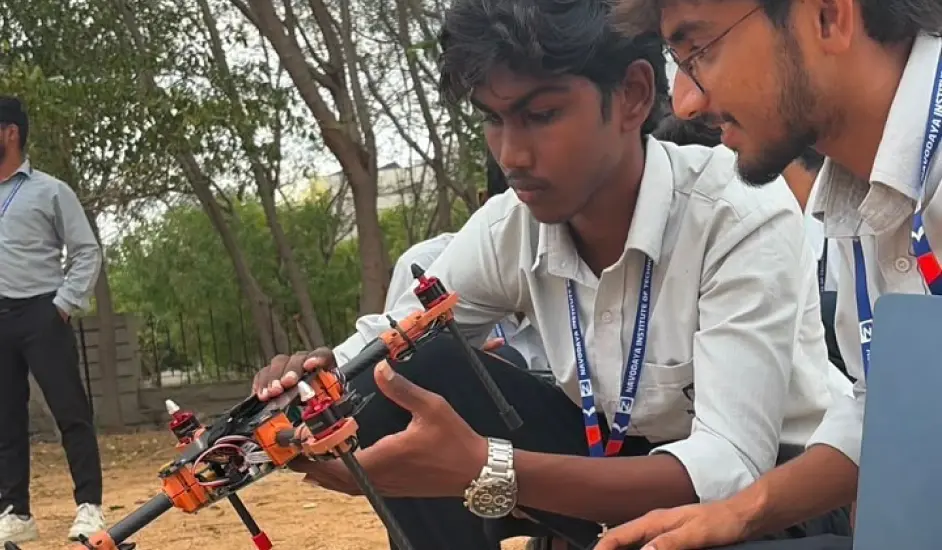
You can read a hundred articles about how a drone flies. You can watch videos explaining flight controllers, ESCs, and propulsion systems. But none of that compares to the moment you actually build a drone with your own hands. Tightening the last screw, running your first calibration, and watching it lift off the ground because of decisions you made.
This is the core idea behind hands-on drone education: skill isn’t something you memorise, it’s something you develop through repetition, troubleshooting, and real experience. A student who has physically assembled a drone understands wiring, motor balance and flight stability in a way no textbook can teach. That kind of practical fluency is exactly what employers are looking for.
The Rise of the DIY Drone Kit
This is exactly why the DIY drone kits have become such a powerful learning tool. Instead of studying drone components as abstract concepts, students work with real parts. Flight controllers, motors, frames, propellers, sensors and assemble them into a fully functioning machine.
A good DIY drone kit does more than teach assembly. It teaches:
- Problem solving – What happens when a motor doesn’t respond? How do you troubleshoot a calibration issue?
- Precision – Drones are unforgiving of sloppy wiring or imbalance; every connection matters.
- Systems thinking – Understanding how mechanical, electrical, and software components work together.
These aren’t just “drone skills.” They’re transferable skills that apply directly to robotics, embedded systems, electronics, and even software engineering.
The Career Opportunities Are Real and Growing
The job market around drone technology is expanding rapidly, and it’s not limited to “drone pilot” as a single career path. Hands-on drone training opens doors to roles like:
- Drone Technician / Drone Integrator – building, maintaining, and repairing UAV systems
- UAV Operator / Certified Pilot – flying drones for agriculture, mapping, inspection, or commercially
- Drone Engineer – developing new drone applications, integrating sensors, cameras, or AI-based navigation
- Embedded Systems Developer – working on the flight controllers and onboard computing that make drones intelligent
- Robotics & Automation Specialist – applying drone-based skills to broader robotics and automation careers
As industries continue integrating UAVs into their operations, demand for people who can actually build, program, and manage drones, not just talk about them will only continue to grow.
Skill Built by Doing, Not Just Studying
The biggest misconception about drone technology is that it’s reserved for engineers or tech experts. In reality, the most effective way to learn is to start building even with zero prior experience. A well designed DIY drone kit removes the traditional barriers (soldering, technical jargon, guesswork) and replaces them with a guided, hands-on process where the build itself becomes the education.
This is exactly the philosophy behind structured drone education programs. You take a student with curiosity give them the right tools, and let hands-on experience do what theory alone never could.
The Future Belongs to the Builders
Drones aren’t going away, they’re becoming more embedded into everyday industries every year. And as that happens, the demand for people with real, hands-on experience will only increase. Whether you’re a student exploring a future in robotics, an engineering aspirant looking to stand out, or simply someone curious about how drones work, there’s never been a better time to pick up a DIY drone kit and start building.
Because in this field, the people who thrive aren’t the ones who only studied drones, they’re the ones who built them.
At Dronacharya Tech Hub, we’re building the next generation of drone talent through hands-on drone education, DIY drone kits, and real world UAV training.