
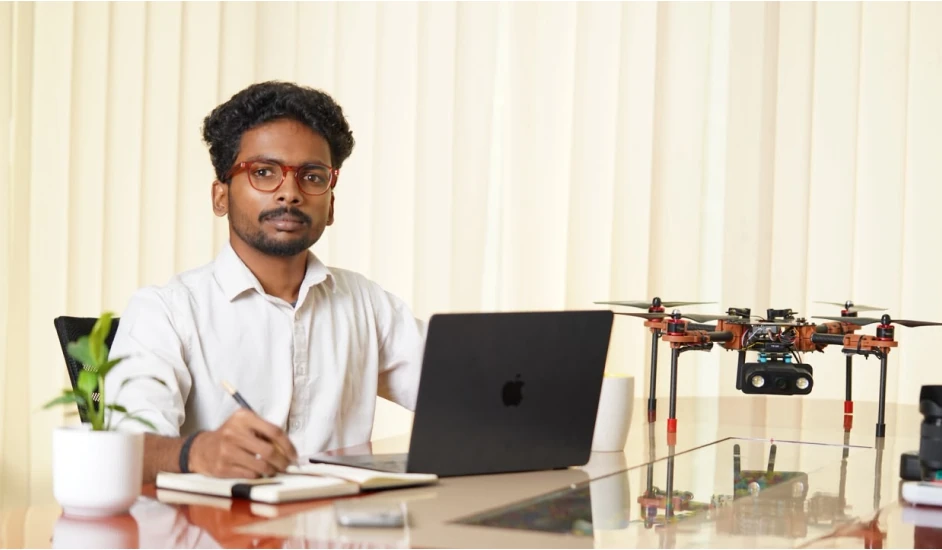
Every engineer has a story about where their curiosity began. Mine started in school, where I loved building working models and exploring the science behind how things functioned. Whether it was a simple science project or a mechanical model, I was fascinated by the process of transforming an idea into something tangible that could solve a problem or perform a task.
A defining moment came when I received a small toy glider as a gift. While it seemed like a simple toy, it sparked countless questions about flight, aerodynamics, and how aircraft stay airborne. That small experience ignited a passion for aerospace engineering and inspired me to pursue Aeronautical Engineering after completing my higher secondary education. My goal was simple, to understand aircraft design, aerodynamics, structural engineering, and flight systems, and eventually contribute to the development of innovative UAV and drone technologies.
Turning Curiosity into Engineering Skills
When I began my engineering journey, I was determined to transform my childhood curiosity into practical engineering expertise. That ambition eventually led me to Dronacharya Tech Hub (DTH), where I have spent the past year learning, contributing, and growing as an engineer.
Working in a fast-paced drone technology company gave me exposure far beyond what a classroom could offer. Over the course of my journey, I had the opportunity to contribute across multiple departments, including Research & Development (R&D), Operations, Production, Procurement, Mechanical Design, Electronics Integration, Documentation, Quality Testing, and Technical Training.
Each department provided valuable insights into the complete drone development lifecycle, helping me understand how a UAV evolves from an initial concept into a fully tested and flight-ready system. I learned that building a successful drone requires seamless collaboration between engineers, designers, procurement teams, production specialists, and testing experts.
Learning How to Build a Drone from the Ground Up
One of the most rewarding parts of my experience was understanding what it truly takes to build a drone. Drone development extends far beyond assembling components, it requires careful planning, component selection, CAD design, structural analysis, electronics integration, flight controller configuration, software optimization, testing, validation, documentation, and continuous improvement.
Being involved in R&D drone projects allowed me to gain hands-on experience with:
- UAV mechanical design and structural development
- Flight controllers and sensor integration
- Propulsion systems and power distribution
- Drone frame design and component selection
- System integration and wiring
- Testing and flight validation
- Technical documentation
- Product improvement through continuous iteration
These experiences helped bridge the gap between engineering theory and practical implementation while strengthening my problem-solving and analytical thinking skills.
Working on DIY Drone Kit Development
A significant part of my learning involved contributing to DIY drone kit projects that are designed for students, researchers, educators, and drone enthusiasts.
Working with a DIY drone kit offered a unique perspective on how engineering concepts can be simplified into practical learning experiences. It deepened my understanding of modular UAV architecture, system integration, troubleshooting, and real-world drone assembly.
By participating in these projects, I learned how a DIY drone kit can help aspiring engineers understand electronics, aerodynamics, embedded systems, and flight control through hands-on learning rather than theory alone.
Contributing to the Development of the Vikas R&D Drone
One of the highlights of my journey at DTH was contributing to the development and continuous improvement of the Vikas R&D Drone.
This opportunity allowed me to participate in multiple stages of product development, including design reviews, component integration, prototype improvements, testing, validation, and technical documentation.
Being involved throughout the development cycle helped me appreciate how engineering decisions impact performance, reliability, manufacturability, and user experience. Every design iteration presented new challenges that required collaboration, experimentation, and systematic problem-solving.
Working on an R&D drone taught me that innovation is rarely a single breakthrough. It is the result of continuous refinement, testing, learning from failures, and improving every small detail.
Sharing Knowledge Through Drone Workshops
Beyond engineering and product development, I also had the opportunity to contribute to several drone workshops and technical training programs organised by Dronacharya Tech Hub.
Interacting with students, educators, hobbyists, and professionals enhanced my communication and presentation skills while allowing me to share knowledge about UAV technology, drone design, and practical engineering applications.
These drone workshops reinforced my belief that hands-on learning plays a vital role in engineering education. Watching participants build a drone, understand flight principles, and gain confidence through practical experience was incredibly rewarding.
It also reminded me that engineering is not just about creating technology, it is equally about sharing knowledge and inspiring the next generation of innovators.
Beyond Engineering: Learning Teamwork and Innovation
Working across different departments taught me much more than technical skills.
I learned the importance of cross-functional collaboration, effective communication, documentation, project planning, and continuous improvement. Every successful UAV project relies on multiple teams working together toward a common objective.
Whether supporting procurement, assisting production, documenting engineering processes, integrating electronics, or validating drone performance, every contribution plays an important role in delivering a reliable final product.
The experience also strengthened my adaptability, time management, and confidence in tackling complex engineering challenges.
Looking Back on a Transformative Year
Reflecting on the past year, I realize how much I have grown, not only as an engineering graduate but also as a professional.
Dronacharya Tech Hub provided an environment where I could apply classroom concepts to real-world drone engineering challenges. Every project, every prototype, every flight test, and every discussion contributed to my development as an aspiring UAV design engineer.
The mentorship, collaborative culture, and hands-on opportunities helped me develop practical skills that cannot be learned through textbooks alone.
Looking Ahead
As I continue my engineering journey, I carry forward the knowledge, experiences, and mentorship I gained during my time at Dronacharya Tech Hub.
My passion remains the same as it was when I first held that toy glider — to design, develop, and improve innovative UAV systems that solve real-world challenges.
I look forward to contributing to advancements in drone technology, aerospace engineering, and intelligent UAV solutions while continuing to learn, innovate, and push the boundaries of what is possible.
For anyone passionate about drones, UAVs, engineering, or learning how to build a drone, my journey has shown that curiosity is where it all begins but consistent learning, practical experience, and collaboration are what transform that curiosity into a meaningful engineering career.